Steel industry in India has received a massive increase in its total production during the last few decades and it is all possible due to developed technology, increased manpower and good investment. Many industries are operating in the worlds which are shifting their plants to those areas which are having cost effective measures like good technology, proper investment and employment opportunities too. Most of the industries are providing better steel production in this way to other countries in the world too. The second good factor behind this success is ERP solutions are effective in a proper manner. The ERP for steel industry is important as it provides the backbone to all the industries which future perspective and better information transparency.
ERP is meant for Enterprise recourse planning. It is a term very common in many organizations where information is stored inside the computer under different sections. It is a software enabled program which is operated by a professional hand who learnt or having any idea about the ERP. Since the technology is improving, different versions of ERP are available in the organizations. The ERP software company India is having the workforce who is experienced to operate ERP for steel industry.
There are many ERP Software company India which are effective and are providing good support to these industries through which it is possible for them to get better results in production. These companies are having experience and experienced workforce through which all the things is possible. Most of the steel companies are getting services from them from a long time through which better production is easier for them. There are different areas where ERP for steel industry is effective and required. One of them is under production planning strategies. There are various problems arises during the production process at which its need is required. The second area where it is important is for business forecasts. Under this section, market trends, forecasts and requirements of customers are studied through which production is possible in a best manner.
For all these purposes, ERP Software Manufacturing Company India is very effective as without their support, it is not possible for a steel company to get ERP technology enabled in its enterprise. As it helps in providing better IT resource to the steel industry, it is important for them to enable ERP to handle machine tools, process control, managing human resource, forecasting, shipment planning and for different other needs. Through this technology, it is important for a steel industry to expand its operations and for manpower; it goes easier to produce that much amount which is required for the customers. These steel industries now days are very dependent upon the ERP solutions and are having one position vacant for this post with which, the employment opportunity also raised for the deserving candidates. Many companies are catering this service to these3 industries on contractual basis for better services which enables their production with effective manpower.
Those companies which are operating for steel industry are providing satisfaction to their clients in this outsourcing process. They are available 24/7 through which the problems can be solved easily; they are having multi warehouse operations.
Well, then the union budget for 2022-23 is obviously a good news for the people who are connected to steel industry in any way.
In this blog, we are going to see how?
We basically will look at the major sources that will influence the steel industry directly starting with the previous year’s growth in the steel industry.
During this period, the country’s output of finished steel registered a year-on-year growth of 28.9% to 62.37 MT, while the consumption of the same grew 25% to 57.39 MT, the survey for the ongoing financial year said.
According to the survey, the performance of the steel industry is pivotal for the growth of the economy, despite being hit by COVID-19, the steel industry has bounced back with cumulative production of crude and finished steel in 2021-22 at 66.91 MT and 62.37 MT, an increase of 25.0 percent and 28.9 percent respectively over corresponding period last year.
With the economic recovery, the global demand for steel is slated to increase his year and the next and the trend is expected to continue the next financial year as well. The PLI Scheme for speciality steel is also “well timed” to provide the necessary incentive towards investment in value added steel- a step in the direction to increase its production for internal consumption as wellas exports.
Additional measures such as domestically manufactured Iron and steel products policy, quality control order covering carbon steel, alloy steel, tin plate, tin free steel and stainless steel and a research and development scheme viz, “Promotion of R&D in Iron & Steel Sector to address the technological issues faced by the sector also aim to strengthen the industry, the Survey said.
The very next day, the India Government has announced a new budget for 2022-23 of $526.98 billion, up by 4.6% from the revised estimate for 2021-22.
The government aims to enhance job creation and boost economic activity by expanding national highways, increasing affordable housing and manufacturing new-generation trains, will directly influence the steel industry. Let’s see how?
(i) The Budget for 2022-23 is development oriented. The large focus is on the infrastructure development, which include the expansions of national highways, project of various metros in 18 cities, Expressways to be augmented in 2022-23 to facilitate faster movement of people and goods.
For the expansion of national highways and Expressways ,The ministry of Road Transport and Highways has issued order that all steel- whether produced from ore, billets, pellets or melting of scrap-would be allowed to be used for National Highway construction, as long as it meets the standards required for specific grades of steel. The steel proposed to be used would be tested in NABL- accredited laboratories as a third party check before approval. The move is based on analysis and discussion with stake holders and also technical opinion. With this step, the supplier base for steel used in the construction of national highways would increase, leading to more competition and better price discovery by the markets. This is also part of the continuous effort by the Minister to reduce costs through use of new technology, reducing restrictions on suppliers and making the procurement system transparent.
And with the development of various metros line in 18 cities some of which includes rapid metros projects. These metro projects will help the steel industry directly, as steel played a significant roles in easing transportation woes. Steel has been the preferred choice for the metro. Superior quality steel has been provided by top-notch Indian steel companies, like JSW, SAIL, RINL, etc. Public sector undertaking such as SAIL has provided 55000 metric tones of steel for Delhi Metro’s Magenta Line in 2017. It supplied TMT, structural and plates for this project. RINL too provided high-quality domestic steel to the Delhi Metro. BEML Limited manufactured and supplied 156 stainless Metro cars to DMRC for carrying out its second phase of operation in Delhi.
Private sectors firms like JSW Steel have played a major role by supplying 6,393 MT of TMT. The new project constructions of Delhi Metro have used domestic firms TMT Rebar. The roof of the state-of-the-art Delhi metro is made of steel and done by a collaboration between two industrial giants from Australia and India. Steel has been the go-to material for passenger safety for the Delhi Metro rail Corporation. In a bid to curb accidental falls on tracks, DMRC has resorted to install in barriers/railings at important metro stations. Till about a couple years ago, the metro experienced dozens of crippling disruptions caused by technical snags and resulted in pow3er failures. The frequent snags occurred because of the rusty copper pins used in the over shed electrification. The metro has now replaced them with stainless steel ones for improved safety and longevity.
(ii) As the government is promoting alternate energy options such as thermal power plants will directly influence steel industry as steel has been the boon for mankind with its multi-functional aspects and adaptability features. It would not be wrong to mention that the development of mankind could not have progressed without the help of steel in power plant generations. But what exactly makes steel the most adored alloy in power plants?
- Ability to form under hot and cold conditions
- Excellent weld ability
- Good machinability
- High strength
- Wear resistance
- Corrosion resistance to most of the process conditions
- Heat resistance
- Durability at high temperatures
Well, the list goes on and on.
So as long as the government is promoting alternate energy options the steel industry will keep on growing its importance in India as well as worldwide.
Keeping the above points in mind we can say that this year will be a great year for the manufacturers of the steel industry as the production rate will be high and to keep up with the deadlines of the projects and to manage the manufacturing process and to keep a look on the stocks and the raw materials the company will be in a state to have a software which will match to their requirements and have a specialization in steel industry that will be keeping up to the production and management accurately of the organization.
So, we can conclude that this will be a three dimensional development. The union budget only came into the favor of the infrastructure but the base of the infrastructure related development process will be directly linked to the steel industry and the better production and management will seek some requirements from IT industry too.
]]>
With the increased demand of heavy duty production in relatively lower time period, only mechanical setup is not enough to speed-up the manufacturing process. There is dedicated enterprise resource management software designed and developed by IT experts. These integrated set-ups are meant to offer one stop solution for all enterprise requirements including product planning, inventory management, financial management; keeping accounts records, labour management and managing the entire supply chain.
Being an integrated resource management system, ERPs have been able to help the manufacturers to have sound and effective client relation management benefits too. Hence, the manufacturing units are not only taking benefits of ERP setup in terms of improved production methodology, but improved business standards as well.
The leading ERP trends, which have transformed the entire structure of resource management for enterprises include mobile ERP, social ERP, cloud ERP and Two tier ERPs. Each one of these software systems is designed by IT experts to cater different requirements of the marketplace. Since market has different types of clients operating in numerous fields and accordingly having several types of requirements. These ERP systems are designed and developed accordingly. For example, mobile ERP helps the managers to access through the required information about their enterprise on the go. They can utilize their time while traveling and workout the entire process.
On the other hand, social ERP setup is designed by keeping the latest social media trends in mind. Social media has grown with such a pace that it has become important for businesses and hence having a dedicated enterprise resource management setup is a brilliant idea. To preserve the information over the cloud and keep it safe yet accessible to designated users is urgent need of almost every business enterprise these days and cloud ERP has made it possible.
Two-tier ERP is basically an effort taken by the IT experts to build a setup which is all inclusive of all the elements mentioned above. Such innovative advancements are introducing a whole new world of technology, which once integrated with mechanical work, assures guaranteed growth and effective management without any error. Such solutions are world class and help the businesses to develop their growth scale on excellent basis. Technology is weaving new ways of growth, which are going to be brighter and better in every possible manner.
]]>When you think of Enterprise Resource Planning or ERP, the very first thing that comes to your mind is the huge investment that goes into developing it. Every organizer who plans to incorporate ERP into its business expects to get maximum benefit from it.
Let us begin with brief record of how ERP be at its birth stage:

- When it was developed ERP, systems were very expensive beyond the reach of common man, complex and difficult to manage.
- It was costly and implementing it required lengthy procedures. It was tailored with complexity and there were some loopholes with it for it was unable to tailor the system to the business.
- When it comes to installation, earlier ERP tended to be on premise, i.e. installed and run on your site servers and computers. The major portion of budget gets used during implementation phase thus making it unaffordable for many small and medium businesses from investing in ERP.
- Historically maintenance contacts were sky high and a company with complex on premise ERP has was shelling out maintenance charges to IT services providers to look after their servers and other hardware along with maintenance of ERP itself, whether you purchase ERP through vendor or partner.
- Earlier ERP were very rigid with less or no flexibility. ERP systems forced to implement every single component of the software whether it was useful for your business or not. The result was that you have no control in selection of the process for your business and it was the vendor who used to select entire set up for you. Such lack of flexibility resulted in restricted business growth and makes it difficult for business to respond to market demands quickly.
- Complexity was another name of ERP in its earlier days. The main problem was that one was not able to add functionality easily or integrate it with other systems very successfully. ERP of initial stage made customization of any kind difficult and time consuming and the process would take months of work and some serious spending. And if you after strong battle win up and make customization as per choice, you end up losing to software upgrades that become serious agony to manage.If you want to succeed using ERP in today’s connected world, legacy ERP’s are not the solution as inevitable manual processes that go with them are not cut out for today’s connected world.
Change and ERP of today
Today the market has transformed itself to digital and mobile arena and ERP solutions are meant to be more integrated, more agile and more accessible. And the new generation ERP – Cloud ERP is meeting the modern technical needs.

Cloud ERP features innovative and state of art technology architectures with easily accessible data. It is also easier to incorporate, simpler to manage (which was not with Legacy ERP) and provides good return on investment (ROI).
Functionality
Cloud ERP of today has the capacity to handle many complex processes like work flow tools by creating a range of useful apps and integrating all to extend the core functionality of the product. In other words, ERP of today is more feature rich and gives you the option to add functionality that was not possible with complex on premise ERP of.
Minimized Capital expenditure
As modern ERP is cloud based there is no need for the manufacturers to invest in their own servers and storage, or buy license upfront that might not be needed straight away. Instead here payment can be made coordinated with usage – monthly or annually on a subscription basis. This makes ERP affordable to smaller businesses and deployment is faster.
No Maintenance Costs
As there are no servers to maintain and the up grading of software is done automatically as part of package. So, no separate maintenance contracts as everything is included in the monthly/annual subscription fees. Also, there is no more of tiring time constrained upgrading to ponder upon.
Cloud ERP is customizable as it makes use of best web standards and visual tools to make customization easier. It has third party app or integration that will make the software do things as desired by you and in case there is no such app, creating it is not a problem at all.
It is flexible in the sense that you can choose the functionality you need. Whatever you want can be added as per the needs and there is no force on you to implement every component of the software.
ERP of today allows you to add new users as and when required. This enables you to do away with users that you do not need for some time.
Integrated ERP
Cloud ERP is integrated in the sense that it can be easily synchronized with other business systems like CRM and Ecommerce. ERP is no longer just an ERP as it is meant to integrate easily with all your key business processes and data.
You can easily coordinate all your finances and order management with your ecommerce, customer service, marketing etc. and render high level of service that customers expect to receive in today’s competitive world.
Mobile ERP
Smart phones have entered the market with jet speed and every business man wants to access the systems using mobile phones and it is expected that ERP should be able to operate across all platforms and devices to meet changing business requirements.
ERP accessed through mobile enables enable perfect visibility in the sense that they can work even on shop floor, or in factory or at client or supplier’s sites. Managers should be always on high alert to survive in this highly competitive arena. They are needed to be alerted to realistic situations regarding business performance, matters related to sales or customers.
With Cloud, you can access the performance of any point of business procedure from any place with your mobile. Forget about those days where you must wait until you get back to office for updating the system and say bye to days of VPN connections that provide slow and limited remote access to your data.
Cloud ERP is there anytime, anywhere with one internet connection and mobile friendly app means the data is available in any device you want in appropriate format. With Cloud, ERP has been within the reach of smaller companies, which for a dream for them earlier. This puts smaller organizations on equal footing as compared to the larger ones.
With scientific ERP selection checklist, the organization can make perfect choice of the system. The checklist should include many factors that are vital and essential for success of almost every ERP project.
ERP selection checklist:
1. Define requirements
The first step in selecting ERP software is to define the requirements that your system needs to meet. In other words, you should have rock bottom knowledge of your business issues, so that you can be sure what to solve using ERP. If there is no proper and correct understanding of your business and the requirements of the product, you may end up cornering the solution that addresses wrong issues.
Here is the checklist defining ERP software requirements:
Define the business needs right away.
Use multi departmental approach to get bird’s eye view of ERP requirements.
See that importance is ranked to all vital functions and features.
Are you seeking ERP vendors to match your needs with vendor’s potential offerings?
Are all the employees involved in assessment?
2. Match requirements
Now you know that what are the needs of your business that are to be solved, your very next step is to match the requirements with the needs. Here is the checklist of how to carry out this step:
Request each vendor and verify their competencies and experience.
See that the custom solutions that they provide really are coordinated to your needs and objectives.
Check if your vendors are in the position to handle your unique business needs and requirements.
Make a list of vendors who can match your needs
Now cross check each vendor’s experience and competencies in tune to your specific needs.
Ask for demo version for testing and evaluating the functional traits.
Involve key personnel in trail to ensure complete evaluation
Select the system that address your business needs and requirements
If you find no system matching your requirements, do not stop instead look for other solution partners and ERP developers.
3. Ensure Training and support
Now after you selected ERP software solutions; matching your requirements, the next step is to find out whether the vendor has the capacity to provide adequate support and training resources. This is vital aspect that needs to be taken account of, for all the ERP solutions are rather complex and requires lot of employee time and effort for introduction into working environments.
Train your personnel in use of ERP software by providing them will all round support of resources, including tech documentation, user guide, manuals, online resources etc.
Checklist for transpiring this step:
Request the vendor you selected to provide support service.
See that they provide trainers.
Look for the training options they provide
Agree upon training schedule with the provider
Request your IT personnel for maintenance schedule with the provider.
Find out the training options that are available.
See that the service provider has at least two to three employees glued to the phone and remote support.
4. Benefit from Independent Consultancy
Apart from receiving ERP training and support, you must for an external expert, who has in depth experience and expertise in using and managing various ERP systems. This is applicable to the organization that does not have internal IT department of its own. Here is checklist for this step:
Go for independent companies; that are not interested in any vendor solution.
Go for software consultant that fits your pocket.
See that this consultant is a perfect middle man who can negotiate well with your personnel and vendors.
Combine your internal staff training schedule with consultant’s activity
5. Engage Employees
With the beginning of this step, your organization has implemented ERP software system and all your workers are provided with required training and support. But the point is even if the system is incorporated in the working setup, does not mean that it is effectively used and even though all your personnel are well trained, they may not understand the practical picture of the entire aspect. What they might know what are the tasks that are assigned but do not realize how to contribute the same tasks to business success. Without proper employee engagement and understanding your ERP software will be rigid and static.
For high employee engagement, here are few tips:
View your ERP software as changing process requiring continuous audit and control
See that every user has the knowledge to operate the system
See there is free flow of knowledge transfer between the users
Hold sessions with the staff to explain them about business setup and the system that is managing the process.
Relate each user’s contribution to the company’s success.
Make a schedule to track and measure ERP project on regular basis.
6. Commit Resources
This is the final step in ERP software selection checklist. This step requires the need to allocate as many as resources as required to the entire transformation process. Your ERP project requires high resources because of lengthy implementation and challenging journey. Your business budget should be ready for this change and journey by following below mentioned checklist:
Do you have enough management and financial resources for ERP solution?
See that you will never think twice while allocating resources to your ERP project.
You should spend enough time to review and analyze each vendor’s solution.
These are 6 best evaluated checklists for selecting ERP software for success of your business. Business planners and analysts can follow the guidelines on how to define and match their business requirements, select the right ERP vendors, engage the personnel, and ensure resource commitment to the best of the advantage of the organization.
Developing ERP software costs a fortune and also it requires major changes in the organization. The main motto of ERP is to manage and integrate data from the core business process into one centre system. Manufacturers have began to understand the rippling benefits of ERP – increased productivity, enhanced efficiency and more volatile work structure.
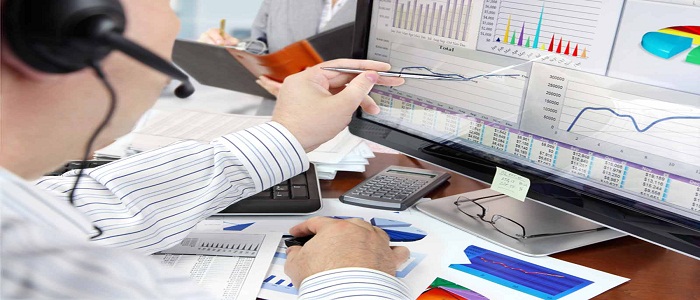
However these benefits can be obtained only if proper steps are taken for implementing it and the project is given utmost care and attention that is required. Involving the right people and understanding what the processes need to be improved makes the half the battle won in ERP implementation.
Here are few steps that have to be taken before commencement on your ERP project:
- Bring your team together: Before making key decisions on ERP project, see to it that you have right people on the team. For this you have to take into account the following:
- Go for executive buy in and see to it that person who is experienced and also from senior level is involved from the very beginning
- Select the project Leader, who has leadership qualities, has in depth knowledge of the project and has the experience execute work within time limits. Leader acts as champion for new system who keeps the project on track and moving and sees to it that the deadlines are met.
- Other members should involve key employees who will provide with all the required help that act as advocate of the system.
2. Locate and record business process that needs improvement: The main motto of incorporating ERP software in the business is to make key process more efficient and streamlining them to common core for enhancing the business productivity. So it is vital to leisurely look at the each business process and have a sessions with different staff members that handle the process and see to it – what works, what does not work and how improvements can be made. It is advisable to record this before working on ERP plan.
3. Establish existing costs: Identify the existing costs of the business like security, support, downtime, upgrades, security, insurance and inefficiencies. Doing such you will understand what cost you incur by your current system and what you end up saving after implementing ERP. Doing so you can corner the budget for your ERP on one hand and on the other you can convince the less willing members of management in favor of ERP.
4. Corner the right vendor: As it is rightly said if source is best the result ought to be equally best. So it is vital to select the right vendor for your business and this you can do by:
- Research on their experience and work culture by interviewing them initially. Make a list of questions like – What is your experience? Testimonials of vendors whose work is transpired recently? Does they provide everything that makes you achieve what you intended? They mode of dealing with disaster recovery and security management? And lastly ask them their performance statistics.
- With the help of such questions you can shortlist the vendors and once you have countable vendors, you can ask for live demo of their software from each one so that you can be clear about your choice.
- Before making the final decision, you should find out exactly what you will be paying over next 5 years and thus get the legal team to go through the contract. Before cornering the vendor, understand exactly what you are responsible for and what you need to be aware of.
5. Locate the right implementation partner: If you have skilled IT in house team then there is no need for you to locate implementation partner. But if you do not possess, you ought to locate implementation partner who have in depth knowledge for smooth functioning of the process and who will make the process much less disruptive.
- Local partner is advisable as they can easily visit you onsite but before you corner see to it that they have required experience.
- Discuss the current business process with the chosen partner may help you in spotting the needs you have missed and also marketing better work plan.
Tasting the success of ERP pro implementation
Once you have corned the vendor after checking the testimonials and demo, next big step is to implement it and make the implementation a successful affair. The vital aspect here is employee buy in. Just make sure that your employees are on board and are using the system correctly as it is only through their inputs and efforts the ERP implementation will taste success.
- Training: Training makes the employee ready to face changes. Good training is best mode to achieve employee buy in for your new ERP system. Also training makes the employees accept the changes readily as it so happens that people doing something for long time resist changes initially particularly if they find new system difficult to use. It is vital to make decisions whether to give in house training or hire a trainer outside your business and if you are sure that you have employees in the organization who provide training then go for “train the trainer” approach by training that person and making him to train others.
- Make sure that senior members are using the system: Set an example before preaching. In other words senior members must make use of the system so that they can send signals that the system is beneficial to the entire organization and can be easily understood if tried. Else if the staff personnel see to it that managers are not using the system correctly then they are likely avoid the new system.
- Frequent review of the system: See to it that the system is reviewed at frequent intervals and is performing well. Communicate to the users of the system at intervals to find out what they are finding, what is working and what they are finding difficult. In case you feel that they are finding it a bit tough then provide training wherever required. Here implementation partner comes to help as they can provide you with system health checks including review of your use of your new software and ideas for augmentation.
Now given the investment that goes into ERP, manufacturers are often confuses whether they should go for a standalone accounting software product or opt for full fledged ERP solutions.
Here are few points that will aid you in making correct decision:
Firstly one must understand what is the difference between the two- ERP software and accounting software? ERP or the Enterprise resource software handles an entire range of business functions covering functional areas like accounts, finance, professional services, automation, human resource, pay roll, inventory, supply chain, project management etc. whereas accounting package handles only accounting part of your business functions.
This means ERP covers all most every area of your business. So before deciding whether to go for ERP or to incorporate accounting software in your business just ask yourself few questions:
1. How many contrasting or unlike systems that you will have to manage?: In case you opt for standalone accounting software you will end up using separate software for managing your leads, customers, partners and vendors and another piece of software to keep a track of your stock and yet another one for managing your projects.
So give a thought that you end up having separate point solutions for managing your one organization. And one of the drawback of having multiple systems for your business is IT management becomes a tough job altogether. And to customize these systems, synchronize some solutions so that they feed each other information makes the entire task difficult and complicated.
When front end and back end systems run separately it can cripple the process that are meant to ensure the smooth running of your company. So for smooth running of business and streamlining all the functional points at one single core, it is advisable to go for ERP software.
ERP software integrates all the functional systems of the business to one single data base. This means you have only one system to worry about and your staff has easy access to the data and duplicated effort is minimized.
2. If planning for business growth: In case you are planning for business growth then go for ERP software. Many accounting packages are great for small and medium business but for large enterprises they fail to cope up with the high volume. So in case you opt for accounting package now and when you plan for growth you may outgrow system capabilities and have to upgrade more feature rich ERP solution at later date as most of the ERP software are scalable and modular in design so that you can continue to expand your system in tune to the growth of your company and requirements.
3. Does staff besides your accounting team need access of certain financial data? If your company has system where in each department has their own separate system to work then in such a case only accounts department of your company can access the financial data. But it is beneficial that members of other departments view certain data that is contained within the accounting software. Say for e.g. sales team want the figures of customer’s payment for last order but if synchronized system is not there they have to go to accounts department to get the information. So with ERP all the information is in the same system and thus each and every person of the organization can see it without disturbing other departments. Restrictions can be set so that each employee has access to information that is needed to transpire their work.
4. Easy report on Key performance indicator: If you want to have key performance indicator data for your business then you need to work out on certain important reports and your accounting software though it tables reports and analytical tools it does not pull all the data together from your organization.
With accounting software you will get only financial data and not other data like stock data, invoice report etc. For comparing sales order with invoice report your financials has to be linked with CRM software and ERP software provides robust reporting tools such and search capabilities as it incorporates all key business data from across the business. With right access one can track any data from any department at one center point and thus reports on key aspects can be created.

For any type query related to ERP please visit http://www.knowiterp.com or call 09811119075
Goods and Service Tax has finally approved in Indian economy (awaited to Welcome). After much ifs and but, the Government of India has finally waved green flag to the GST, which is supposed to hit your business from the next financial year supposedly from July 1st 2017.
GST is an indirect tax reform that aims to remove barriers between states and create a single market.
In other words there will be uniform tax rate between states. As per current taxation system the constitution divides taxation power between centre and the states. Both the levels of the government have some exclusive areas where they can levy tax. Those taxes, that includes company’s profits is exclusive forte of central government and thus are referred to as direct taxes. And indirect taxes are levied on manufacture of goods or provision of services, are also acumen of government at centre. Only taxes on consumption are exclusive domain of state governments.
With GST the tax barriers from state will be removed and a single market will be created and one will experience transparency in taxation that would deter governments from indiscriminately increasing taxes and consumers will not end up paying tax on tax as it happens when the goods move across state borders.
Not only there will be amendments in tax laws and reforms but also every manufacture should modify his working set up in tune with the GST norms. Manufacturing sector in India is the major economic driver. GST is expected to provide major boost to the already lagging manufacturing industries as it will hand out a transformation shift from a complex multi tiered tax structure to one that is integrated and stable.
Among many impacts that GST has on manufacturing sector, the major ones are:
- Reduced cost of production
- Increased working capital
- Hassle free movement of goods
- Restructuring of supply chain
- Area based exemptions
- Improved Compliance requirement.
Several Indian manufacturers have begun their discussions with their IT vendors and tax advisors to upgrade their systems to enable tracking of goods and analysis of tax and other cost implications once the GST regime comes to force.
Companies are more conscious on upgrading their Enterprise Resource Planning (ERP) – business management software to attune the complexities of calculating GST. ERP aids the companies manage and monitor everything in the organization, including supply chain, finance, and even human resource functions.
Companies must move from their current system, where every transaction is recorded separately to an upgraded system where there is correlation between every entry, in tune to the industry executives. Manufacturers widely use ERP systems mainly for supply chain management. Say for e.g. a product manufactured in Mumbai reaches the mall of New Delhi; the ERP records every stage of the movement including the goods carrier’s passage through check points.
But as per current system every state is treated differently, while GST aims to make India a common unified market place and thus required modifications and changes must be made in ERP software – procurement, warehousing and impact on vendors and customers among other changes.
With GST, ERP software will be affected in following way:
- Adaptability
- Scalability
- Customization
The changes in ERP will need to factor on various parameters including procurement, warehousing and impact on vendors and customers among others. Most enterprise must upgrade their systems; that links entries accurately as against their present system that records their transactions separately. Since GST will mainly have impact on data management and taxation, among other things the manufacturers must consider present versions of finance solutions and customer specific developments and plans accordingly.
GST roll out will be a great challenge for the companies in terms refreshing their ERP systems. Integrating new tax system with existing software is tough call and companies must be clear as which module of the software will be affected and how they will harmonize the changes with GST.
With GST on floor, the manufacturers and IT vendors must opt for more hybrid solution that blends on premise functionality with cloud solutions and that adapts GST scenario in the current software setup.
For any type query related to ERP please visit http://www.knowiterp.com or call 09811119075
ERP for steel and Manufacturing industry is a cost effective solution to the increasing industry problems.payday loans It is an integrated solution to all business requirements and is easy to implement and operate. It is customized specially to provide a flexible an easy solution to the steel and manufacturing industries. Manufacturing ERP software is an increasing demand all over the industry.
ERP for manufacturing is customizable designed not only the small companies but also for medium and large industries. Manufacturing ERP is designed for all types of companies which seek a single solution for increasing the productivity of the industry without disturbing the daily operations of business.
Manufacturing ERP system are designed by a combined effort of hundreds of persons who work together for years. It is compiled after various research and ERP Development. It is made feature rich specially for steel and manufacturing industries. It is very user friendly and is reliable and robust.
It consists of various custom made features like concurrent users information, multi threading which is most required for fast processing, multi tasking, user friendly, Management Information system for top managements and middle management as well. It also has various features like help for context sensitive cases.
The Manufacturing ERP provides various kinds of services in different fields. It provides the study of the companies and the user’s requirements and the current practices of the company and the user. It helps in customization of software and allows the customization of the Manufacturing ERP as well. It allows the user to set the configuration parameters as well. It provides Onsite training and implementation as well.
The Manufacturing ERP software helps automate the processes of the company to provide a smooth flowing of the information all over the departments and websites.payday loans It provides a functionality integration and and provides an overall help to the industry of steel and manufacturing.
ERP for steel industries has become vital aspect as it aids in coordinating and augmenting vital elements such as product planning, material sourcing, product development etc. ERP is core method that enables the steel industries to effectively synchronize their supply chain and elevate the information transparency.
Huge investments and complexities involved in ERP implementation makes it difficult to switch over to another ERP. So there should be intelligent process of evaluating ERP software.
Any ERP should be evaluated on the following fronts:
- It should provide full fledged visibility into all the vital processes across various departments of an organization. It should in fact give bird’s eye view of all the works of varied departments to the senior management personnel.
- ERP in a steel industry should aid in automatic and coherent flow of work from one department to another so that smooth and unhindered transition of the process is materialized which results in swift completion of the task. One can also ensure that all the inter department activities are tracked perfectly and not even a single one is missed out.
- A total and single reporting system can be obtained to analyze the status viz. real time performance across all the functional departments.
- ERP should integrate various departments viz. Finance, HRD, Manufacturing, supply, Marketing etc into one central footing with the help of its various modules like Finance, Supply, HRD module incorporated in the system.
- Important criteria to evaluate ERP implementation is whether it is capable of storing data through centralized back up or storage facility.
- Any ERP should be able to track and trace all and any transactions happening through ERP systems easily and in just a single click.
- ERP system that provides good company wide visibility ensures faster and better collaboration of all the activities and understanding across all the departments.
- Other systems like bar code reader etc should be synchronized with the help of ERP.
- Any organization implements ERP for ease and swift transpiring of the work and the ERP systems that eases the vital process like order tracking, inventory tracking, sales forecasting, revenue tracking is the appropriate one that is implemented.
- With the business taking the shape of global scenario, the ERP software should aid in managing the globally dispersed enterprise organizations easily and in a professional and better manner.
If the ERP that is implemented stand tall in all the aspects covered above then it is the appropriate one for the organization else there is high need to change or modify the software.
For any type query related to ERP please visit http://www.knowiterp.com or call 09811119075